
Embark on a journey exploring the world of Real Estate Income Funds (REITs), where lucrative opportunities await those seeking to diversify their investment portfolios and secure steady income streams.
Delve deeper into the realm of REITs to uncover the key benefits, types, and strategies that set them apart in the realm of real estate investments.
Real Estate Income Funds (REITs)
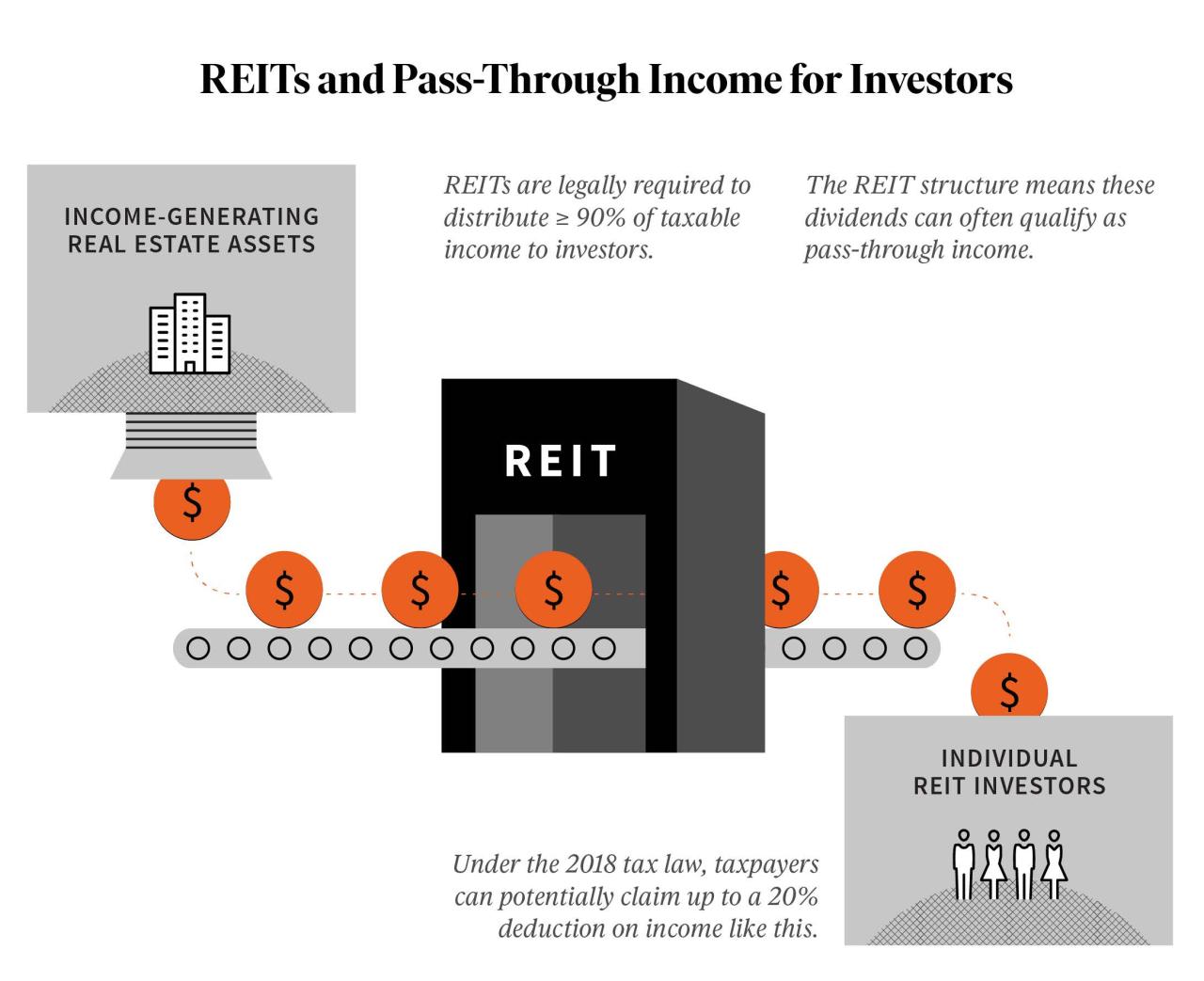
Real Estate Income Funds, commonly known as REITs, are investment vehicles that allow individuals to invest in a diversified portfolio of real estate assets without directly owning the properties themselves. REITs pool together funds from multiple investors to invest in various income-generating real estate properties such as apartment buildings, shopping centers, office buildings, and hotels.
Benefits of Investing in REITs
- 1. Diversification: REITs offer investors the opportunity to diversify their real estate holdings across different property types and locations.
- 2. Passive Income: Investors can earn regular income in the form of dividends from the rental income generated by the properties owned by the REIT.
- 3. Liquidity: REITs are traded on major stock exchanges, providing investors with liquidity compared to direct ownership of real estate properties.
- 4. Professional Management: REITs are managed by experienced real estate professionals who handle property acquisition, management, and disposition, relieving investors of these responsibilities.
Types of REITs Available in the Market
- 1. Equity REITs: These REITs own and operate income-producing real estate properties, generating revenue primarily from rents.
- 2. Mortgage REITs: Mortgage REITs provide financing for real estate by purchasing or originating mortgages and mortgage-backed securities, earning income from the interest on these loans.
- 3. Hybrid REITs: Hybrid REITs combine the characteristics of both equity REITs and mortgage REITs, diversifying their income sources.
Comparison with Traditional Real Estate Investments
- 1. Diversification: REITs offer investors the ability to diversify their real estate holdings across multiple properties and sectors, reducing risk compared to owning a single property.
- 2. Accessibility: Investing in REITs allows individuals to participate in the real estate market with lower capital requirements compared to purchasing a property outright.
- 3. Liquidity: REITs provide investors with liquidity as they can easily buy and sell REIT shares on the stock exchange, unlike owning physical real estate which may take time to sell.
- 4. Professional Management: REITs are managed by experienced professionals who handle property management, maintenance, and tenant relations, relieving investors of these responsibilities.
Income Funds
Income funds are a type of investment fund that focuses on generating regular income for investors through dividends, interest payments, or other distributions. These funds typically invest in assets that produce income, such as bonds, dividend-paying stocks, real estate investment trusts (REITs), or other income-generating securities.
Examples of Income Funds and Investment Strategies
Income funds can vary in their investment strategies and asset allocations. Some common examples of income funds include:
- Dividend-focused equity funds: These funds invest in stocks of companies that have a history of paying high dividends.
- Bond funds: These funds invest in a portfolio of bonds issued by governments, municipalities, or corporations.
- Real Estate Income Funds (REITs): These funds invest in a portfolio of income-generating real estate properties.
Advantages and Disadvantages of Investing in Income Funds
- Advantages:
- Stable income stream: Income funds provide regular income distributions to investors.
- Diversification: Income funds often invest in a diversified portfolio of income-generating assets, reducing risk.
- Potential for capital appreciation: Some income funds may also offer growth opportunities in addition to income.
- Disadvantages:
- Interest rate risk: Income funds that invest in bonds are subject to interest rate fluctuations, which can impact returns.
- Inflation risk: Inflation can erode the purchasing power of income generated by these funds over time.
- Market risk: Like any investment, income funds are exposed to market volatility and economic conditions.
Tips for Selecting the Right Income Fund
- Understand your investment goals: Determine whether you are seeking regular income, capital preservation, or growth.
- Consider risk tolerance: Evaluate how much risk you are willing to take on in pursuit of income.
- Review the fund’s historical performance: Look at the fund’s track record in generating income and preserving capital.
- Assess fees and expenses: Compare the costs associated with different income funds to ensure they align with your investment objectives.
Index Funds
Index Funds are a type of mutual fund or exchange-traded fund (ETF) that aims to replicate the performance of a specific market index, such as the S&P 500 or the Dow Jones Industrial Average. These funds invest in a diversified portfolio of securities that mirror the holdings of the chosen index, providing investors with broad market exposure.
Comparison with Actively Managed Funds
Actively managed funds are managed by professional portfolio managers who make investment decisions to outperform the market index. In contrast, index funds passively track the performance of a specific index without trying to beat it. This difference in management style results in lower fees for index funds compared to actively managed funds.
Benefits of Investing in Index Funds
- Lower fees: Index funds typically have lower expense ratios compared to actively managed funds, leading to higher returns for investors.
- Diversification: By investing in a basket of securities that replicate a market index, investors achieve instant diversification without the need to select individual stocks.
- Consistent performance: Index funds aim to match the performance of the underlying index, providing investors with consistent returns over the long term.
- Tax efficiency: Due to lower turnover and capital gains distributions, index funds are more tax-efficient than actively managed funds.
Examples of Popular Index Funds
Vanguard Total Stock Market Index Fund (VTSAX): This fund tracks the performance of the CRSP US Total Market Index, providing broad exposure to the U.S. stock market.
iShares Core S&P 500 ETF (IVV): This ETF replicates the performance of the S&P 500 index, which includes the 500 largest companies in the U.S.
Inflation Hedge
Inflation hedge refers to an investment that has the potential to maintain or increase its value when inflation rises, protecting the investor’s purchasing power.Real Estate Income Funds (REITs) can act as a hedge against inflation due to their unique characteristics. As inflation increases, the value of real estate properties typically rises, leading to higher rental income. REITs generate income through rent payments from tenants, which can be adjusted to account for inflation.
Additionally, real estate investments are tangible assets that have historically shown resilience in maintaining their value during inflationary periods.
Effectiveness of REITs as an Inflation Hedge
- REITs provide a steady income stream through rent payments, which can be adjusted for inflation, thus preserving the purchasing power of the investor.
- Real estate properties held by REITs tend to appreciate in value during inflation, offering capital appreciation potential.
- REITs offer diversification benefits as they are not directly correlated with traditional stocks and bonds, making them a valuable addition to an inflation-hedging portfolio.
Strategies for Utilizing REITs for Inflation Hedging
- Include REITs in a diversified investment portfolio to mitigate the impact of inflation on overall returns.
- Consider investing in different types of REITs, such as residential, commercial, or healthcare, to spread risk and maximize inflation-hedging potential.
- Monitor the performance of REITs regularly and adjust the allocation based on economic conditions and inflation expectations.
Insurance Premiums
Investing in Real Estate Income Funds (REITs) can have an impact on insurance premiums for individuals. REITs are known for providing steady income and potential appreciation, which can help investors offset their insurance costs.
Relationship with Insurance Premiums
Investing in REITs can help diversify an individual’s investment portfolio, which can ultimately lead to lower insurance premiums. Insurance companies often consider a person’s overall financial health and risk profile when determining premiums. By investing in REITs, individuals can show a stable source of income and assets, which can be viewed positively by insurance providers.
Impact of REITs on Insurance Premiums
- Steady Income: REITs typically provide regular dividends, which can be used to cover insurance premiums.
- Asset Diversification: By including REITs in their investment portfolio, individuals can reduce risk and potentially lower insurance premiums.
- Financial Stability: Insurance companies may offer lower premiums to individuals with diversified assets, including investments in REITs.
Risks and Benefits
- Risks: Fluctuations in the real estate market can impact the value of REITs, potentially affecting the ability to offset insurance costs.
- Benefits: REITs offer a passive income stream that can help individuals manage insurance premiums over time.
Recommendations
- Consult with a financial advisor to determine the appropriate allocation of REITs in your investment portfolio.
- Consider your risk tolerance and investment goals when using REITs to offset insurance costs.
- Regularly review your investment strategy and insurance coverage to ensure they align with your financial objectives.
As we conclude our discussion, it becomes evident that Real Estate Income Funds (REITs) stand as a resilient option for investors looking to hedge against inflation and optimize their financial growth potential. With careful consideration and strategic planning, REITs can pave the way for a prosperous investment journey.
Common Queries
What are the key advantages of investing in REITs?
Investing in REITs provides diversification, high liquidity, attractive dividend yields, and potential capital appreciation.
How do REITs differ from traditional real estate investments?
REITs offer investors the opportunity to access real estate assets without direct ownership, providing liquidity and diversification that traditional real estate investments lack.
What are some popular examples of Index Funds available in the market?
Popular Index Funds include Vanguard Total Stock Market Index Fund, SPDR S&P 500 ETF Trust, and iShares Core S&P 500 ETF, among others.
How can REITs act as a hedge against inflation?
REITs can act as an inflation hedge by typically increasing rental income and property values during inflationary periods, thereby maintaining or increasing returns for investors.
How does investing in REITs impact insurance premiums?
Investing in REITs can potentially lower insurance premiums by providing additional income streams and diversifying risk, thus reducing overall insurance costs.


